
When September Ends, on the music that shaped me, questioning empire, and the fight for liberation
ID: “September” written out in old school stencils on a background of autumn tree
I was a few months shy of 12 years-old when 9/11 happened. I remember so much of that day and its aftermath very clearly, including the (now baffling) decision of our teacher to take us down to the library to let our class watch news updates in real time, even as one of my classmates sobbed in distress, not knowing if her aunt had gone to work at the World Trade Center that day. That year our school Christmas performance was altered to a God Bless the USA theme. And more and more, as a youth coming into my own political perspectives (which were anti-war even then), I realized that I did not quite fit in with most of my classmates' perspectives about the American response in the aftermath of 2001. And as I worked that out, it was often music I turned to in my rural hometown for some sense of not being alone. Music was not only a pathway to community where I didn’t feel any, it was an opportunity to explore the deeper meaning of lyrics.
Whenever I hear Green Day’s Wake Me Up When September Ends, not more often in a grocery store aisle or on the radio during a road trip, I wonder how many people listen and even sing along without knowing the September context of the lyrics is September 11, and the expansion of the state mass surveillance apparatus, sense of American exceptionalism as a litmus test for patriotism (and accompanying refusal to allow any critique of the American Empire), and security theater that has become an accepted norm for many still today. 25 years later, and September still hasn’t ended. At least the playlist of my youth still holds up.
American Idiot - Green Day
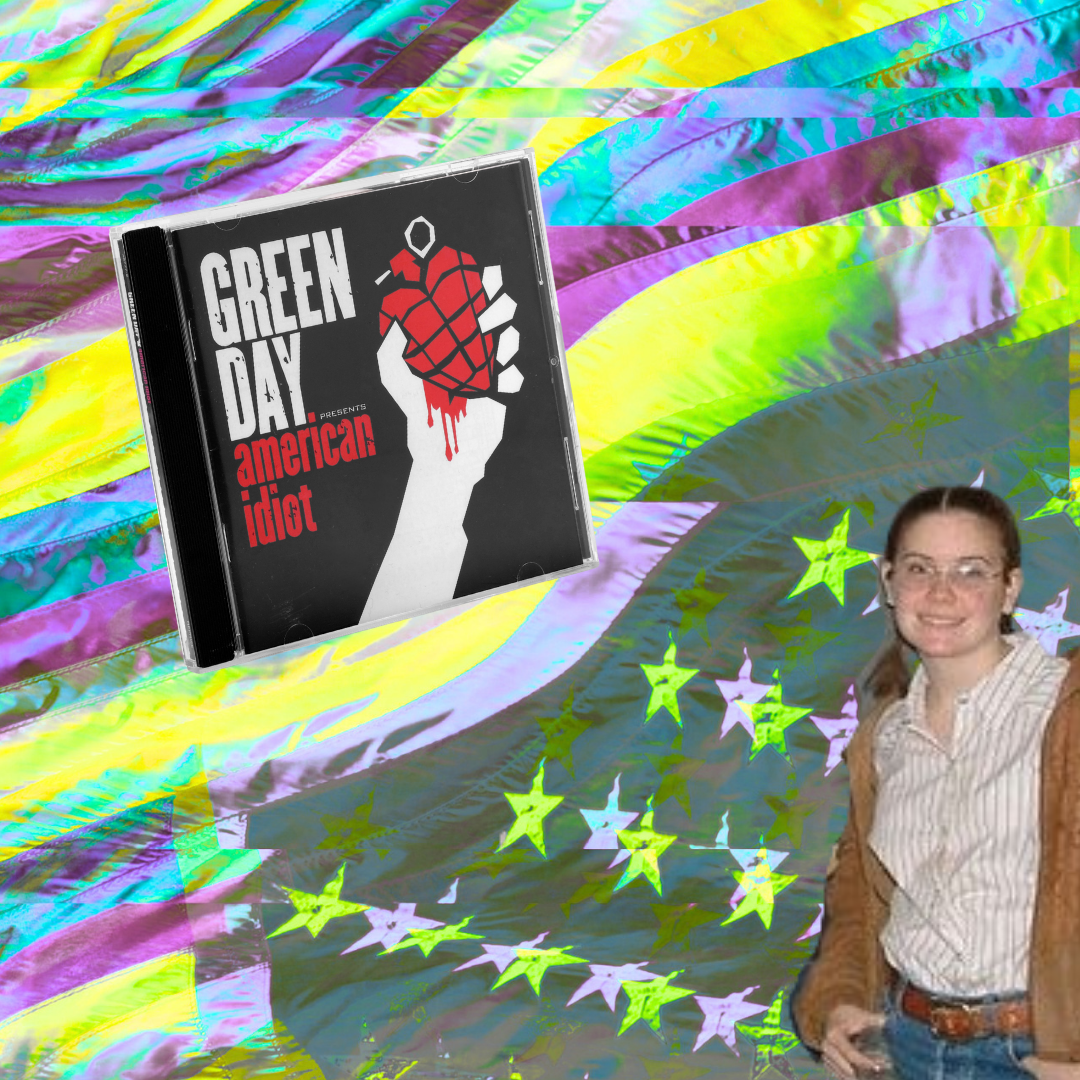
ID: distorted flag background upside down with a picture of Cole in button down and jeans with a Green Day American Idiot CD
While there’s discourse to be had about the casual use of the f-slur on the album’s titular track American Idiot, at a time when even the term gay was being weaponized…this band truly did something for a young me with a lot of angst and anger and no outlet for it. Picture me at my rural countywide school, in a graduating class of 14 people, both deeply interested in every extracurricular (yes, I do have my American FFA Degree and 4-H Gold Star) and also deeply unhappy about the lack of spaces where I felt I could be fully myself, or any effort to question the status quo in a town where the aftermath of 9/11 yielded a mandatory school Christmas program with a Proud to Be An American theme and an increasing investment in racist surveillance tools targeting brown neighbors. And it turns out scream-singing my distaste for George W Bush was a pretty solid coping mechanism to survive my adolescence. And something about it still slaps.
Not Ready to Make Nice - The Chicks
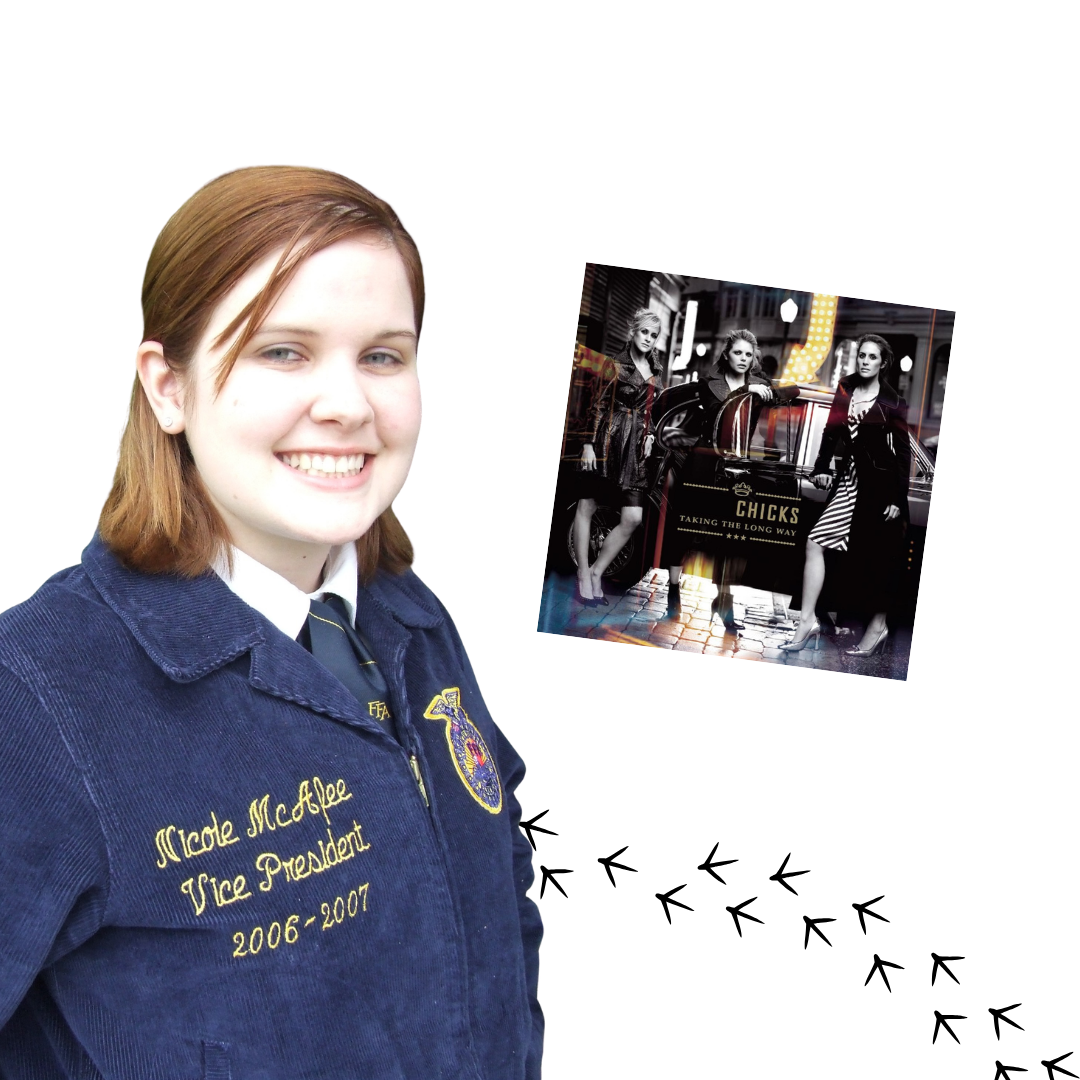
ID: white background with chicken feet and a photo of Cole in an FFA jacket with an image of The Chicks CD Taking the Long Way
Something you should know about me is when other kids I grew up around were banned from listening to The Chicks post their (very mild and correct) critique of George W. Bush, I was excitedly digging into every part of their discography. Yes, I trekked to Austin to see them live on the next to last show of their 2006 tour for Taking the Long Way, a much loved combination birthday + Christmas gift. I sang along (not well) to Not Ready to Make Nice in my car, in my head on school bus trips, in my room, with my sisters, and with a crowd of thousands in the place closest to where The Chicks called home. And it’s still something special to hear that song and relive the history of it, and the ways it made so many of us, maybe especially in red states, feel seen and validated in finding our voices and speaking up.
I Heard It Through the Grapevine - Marvin Gaye
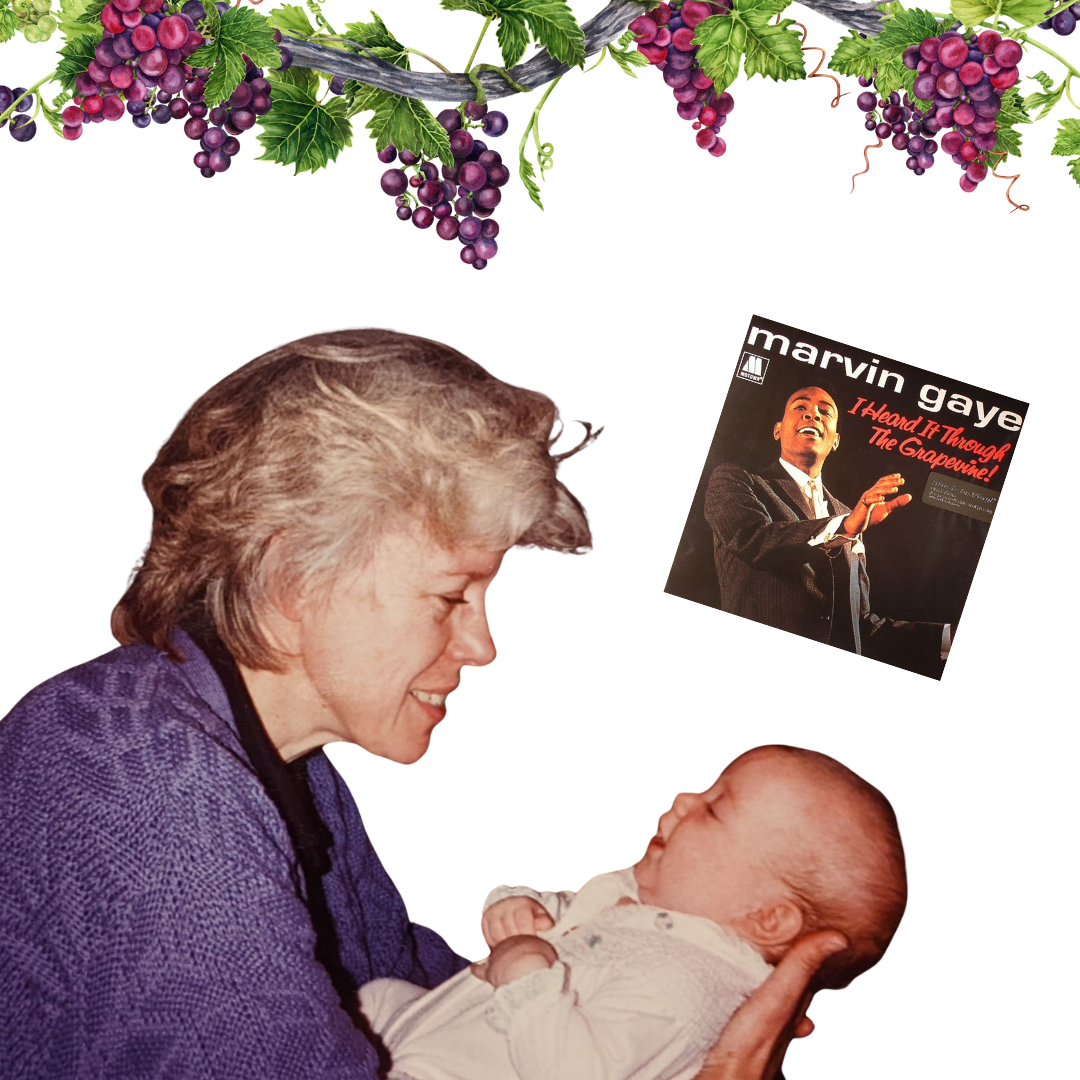
ID: photo of cole as a baby with their grandmother and a grapevine at the top with a picture of the album I Heard It Through the Grapevine by Marvin Gaye
My Nana’s first song-based ringtone on her cell phone was Marvin Gaye’s I Heard It Through the Grapevine. As someone who spent a lot of time with her growing up, and deeply enjoyed classics on Nick at Night as well as modern interpretations of 60s Americana on shows like American Dreams (only had a little to do with my crush on Brittany Snow), I grew up listening to a lot of classics that I maybe wouldn’t have otherwise been exposed to. I Heard It Through the Grapevine takes me immediately back to my childhood summers with my Nana. And as an adult, reading that Marsha P. Johnson recalls that was the song playing throughout the Stonewall Inn when the police raided the bar on June 28 (leading to the Stonewall Riots) felt like kismet.
If you have followed our work at Freedom Oklahoma this year, you may know we’ve focused on crafting liberation with intention, both in the abstract sense, and in digging into more collaborative art-based projects to cultivate the ways in which art provides space for community, connection, and growing our practice of liberatory thoughts and action. And, if you have followed our work longer, you know that art has been at the center of our work (because it’s central to movement and to liberation) always. You might have joined an art night, written love letters, or listened to one of our playlists before. If so, you already know what I am going to say next: the art itself isn’t what radicalizes us, but creating together, enjoying art together, not only sustains us, it opens our minds to new possibilities. Maybe that’s listening to the songs of your (or my) youth. Maybe it’s remembering what it was like to realize you weren’t alone. To have new words for a thought, idea, or feeling. A reason to read into the lyrics a little deeper, to question why some folks were being censored, or to find commonalities in music across time and space.
It’s 2026, 20 years after 9/11, and for all intents and purposes, September still hasn’t ended. But what might it sound, look, feel like when it does? What’s the soundtrack to our collective liberatory awakening?
In Solidarity,
Cole
September Updates
〰️
September Updates 〰️
ID: a white background with the words “SB 904 Update” with red tape and red star over blue tape
We know that many people are still feeling the harmful impacts of SB 904 and the intended chilling effects of this policy through loss of access to gender affirming care. While we have yet to identify any litigation organizations willing to take on this fight, we are continuing to make asks while also working to compile resources for folks losing access to care. As always, this is neither legal nor medical advice from us, and here are some possible steps you can take if your care has been impacted as a result of SB 904:
While not true for everyone, we have identified some cases where insurance companies wrongfully sent out notifications that gender affirming care would no longer be covered. If you received one of these notices, you can check with your insurance point of contact (or have a trusted ally make the ask) and share out what you learn with coworkers and our team (info@freedomoklahoma.org) where we’ll work to help spread the news.
If you have received a letter announcing the end to your coverage, you can send a copy to us at (info@freedomoklahoma.org) as we continue to seek legal support, and you can still fill out our impact form at the top of our health page on the website.
We’re working on support for folks seeking care after losing access as a result of SB 904. While we work out the details around capacity, safety, and support, if you are or know of a provider in Oklahoma who wants to continue to provide care for trans+ folks, please reach out with provider information at info@freedomoklahoma.org. We’ll also note that some folks are looking to private providers for care, including in-state providers such as Planned Parenthood Great Plains, Diversity Family Health, OKEQ Health Clinic, as well as telehealth providers such as Folx, Plume, True U, and QueerMed.
ID: black background with text boxes “LGBTQ+ Youth: Your voice shapes change” and “Take the National School Climate Survey and help make safer, more affirming schools.”
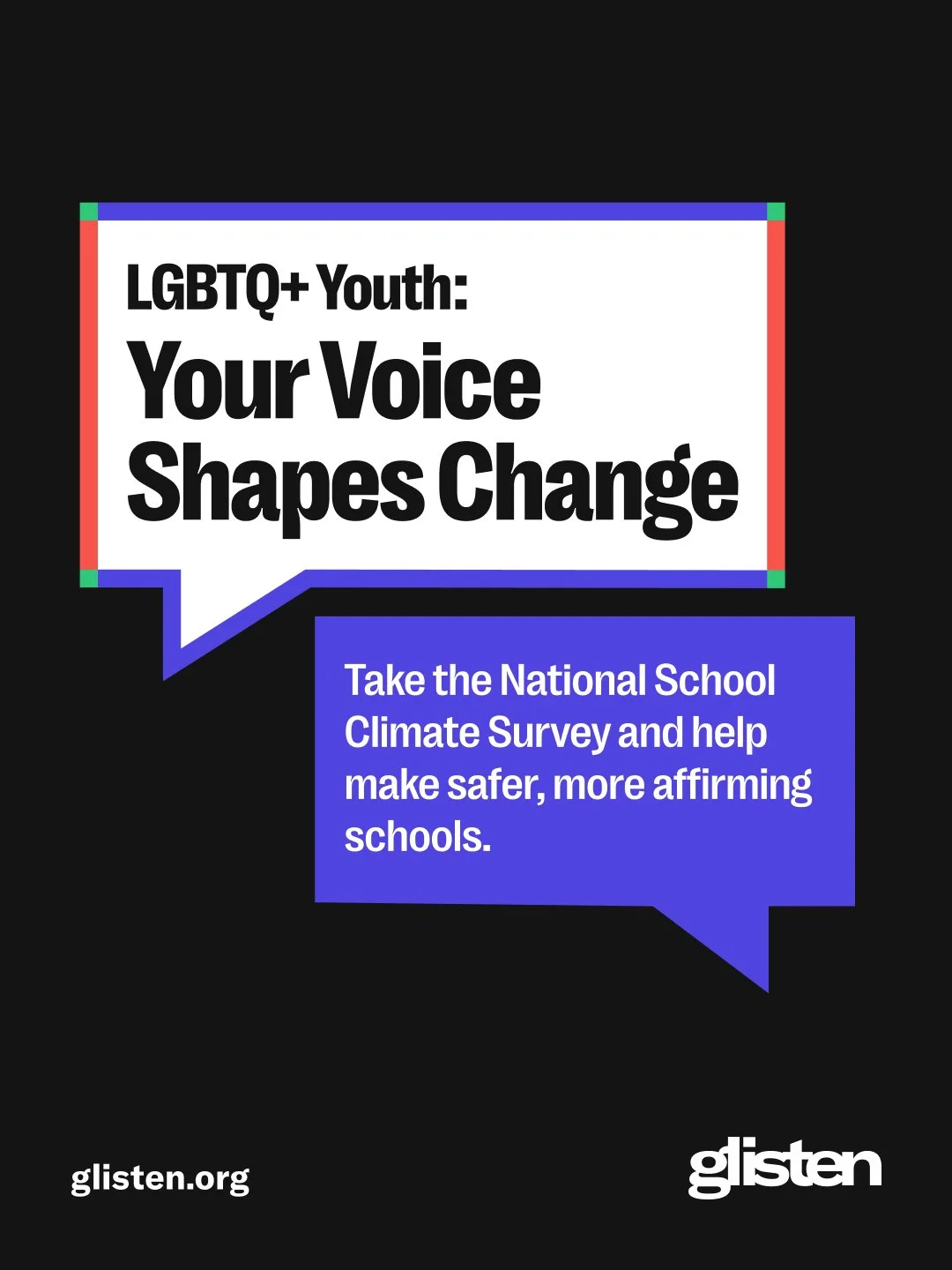
The Glisten National School Climate Survey (NSCS) is our flagship survey and report on the school experiences of 2SLGBTQ+ youth. It asks students to share what school is really like—what helps them feel safe and supported, what challenges they face, and what resources make a difference in their wellbeing and sense of belonging. By gathering thousands of student experiences, the NSCS helps illuminate the current school climate for 2SLGBTQ+ youth across the U.S.
The information students share is used to strengthen Glisten’s work toward safer, more affirming schools—and to help educators, schools, and communities better understand what 2SLGBTQ+ students need. Join Glisten in spreading the word: together, we can make sure more students’ voices are heard.
If you’re a 2SLGBTQ+ person 13 years or older and attended grades K-12 in the US during the 2025-2026 school year, you can help inform this work by participating in the survey here.
ID: a collage with the words “allies zine 9.25” with picture of stapler and paper cutter
Did you know the new head of ICE under Markwayne Mullin’s Department of Interior is set to be Lance Schroyer, who many 2SLGBTQ+ Oklahomans and allies recognize from his militant leadership at the Oklahoma Capitol “protecting” some elected officials from Oklahoma residents and voters who dared disagree with them? The fight for collective liberation relies on body sovereignty, and there’s deep allyship and action needed to make that a reality at this moment, across movements. And that’s why we’re jazzed to continue our Allies’ Handbook Zine series this fall, over the course of the next four months. Join us for a series of conversations about what it looks like to show up and take action to create safety for our undocumented neighbors and those targeted by crimmigration, beginning with a zine workshop on Friday September 25 from 6-8 PM in Oklahoma City. Address information and further details will be sent to registrants closer to the event date, so make sure to register, here!
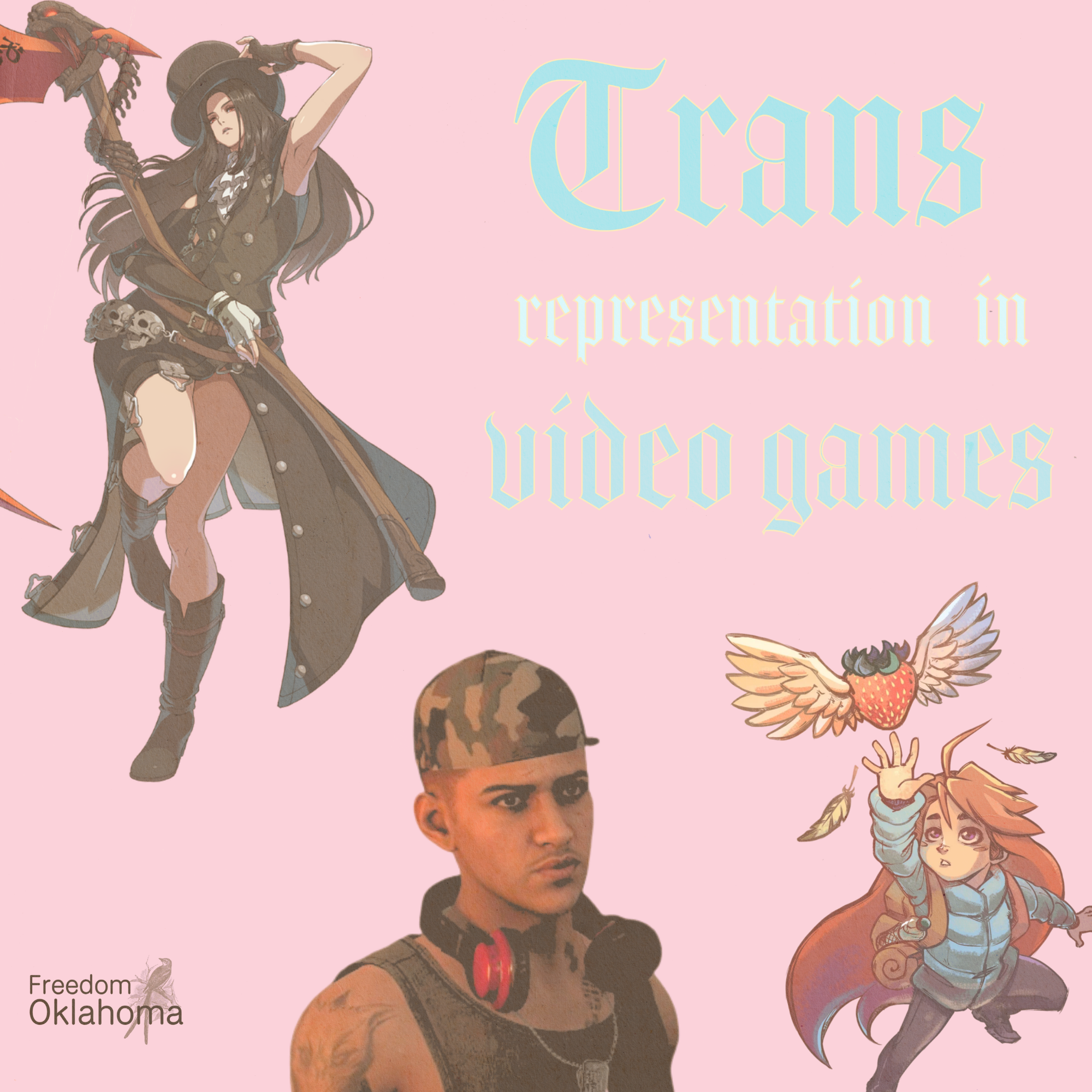
ID: A pink, paper-textured background. The characters Testament from Guilty Gear Strive, Madeline from Celeste, and Paolo de la Vega from Far Cry 6 are staggered across the page. Text reads "Trans Representation in Video Games" in a blackletter, light blue, type font. The Freedom Oklahoma logo sits on the left area of the graphic in black.
Whether you are playing at home or watching a playthrough of your favorite content creator, video games have become a rapidly growing medium for story telling. Regardless of if you find the story of a character incredibly relatable, or if it introduces you to a new perspective you had not previously considered, video games allow players to experience the stories of different characters at a much more personal and interactive level when compared to TV shows and movies.
While nonbinary and transgender representation in media is far more limited than any of us would like it to be, video games have begun to include more characters who are transgender and/or nonbinary. It is thanks to this increased exposure that the unique conflicts of what it means to be trans and/or nonbinary have gained much more visibility, allowing players to sit with and experience their unique struggles in an interactive form of media. Personally, as a fan of fighting games, I noticed that many people in those circles became much more proactive in using the correct pronouns for me when Testament was confirmed to be nonbinary in Guilty Gear Strive. It is representation like this that allows us to continue to be visible without having to constantly explain our existence to those who do not understand it.
These characters show us that our stories as people who are transgender and nonbinary are to be celebrated. Despite the hardships we face today in Oklahoma, we continue to stand tall and proud with resilience and determination. Our lives are beautiful, and we will continue to share our stories through art and media until everyone knows why.